Entry
$5k–$15k
One pin or quality cab plus a multicade, basic lighting, a dedicated corner.
Hangout idea
Cabinets, neon-adjacent light, and one more quarter.
A home arcade is a collection with a floor plan. Two or three machines that actually get played beat a wall of cabinets you have to sidestep. Start with pinball or a favorite cab, leave aisle space, and light the marquee — not the whole ceiling. The hangout is standing beside someone else's game, not staring at your own.
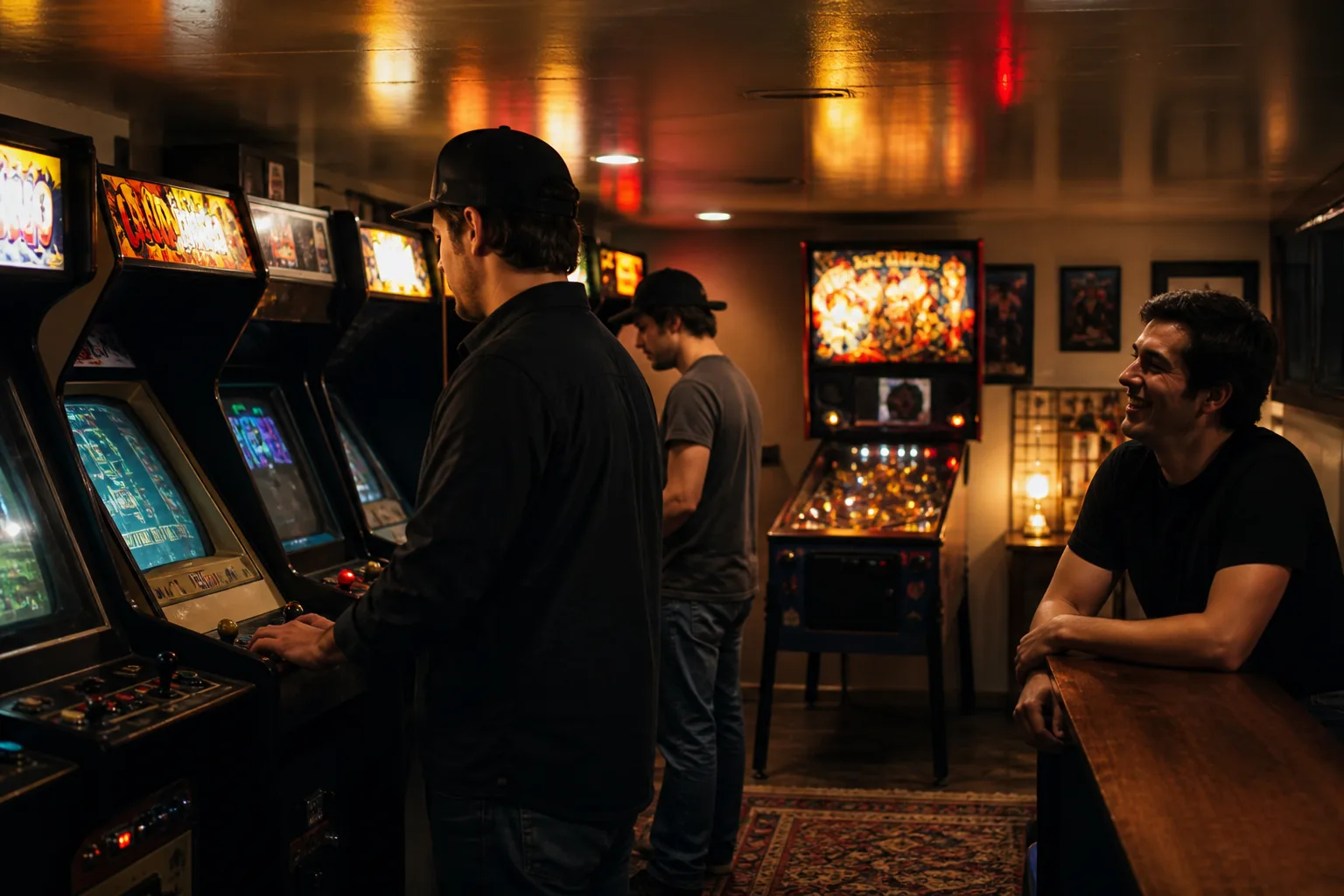
A pin and a cab, or two cabs, against a dedicated wall. The honest start that still feels like an arcade.
A run of 4–6 machines, a ticket or merch shelf, and a bench. Friends can rotate in.
Restored cabs, pinball, a multicade for depth, sound management, and a bar at the back.
2026 U.S. residential ballparks, not bids. Site work, permits, and finishes can move a project a full tier.
Entry
$5k–$15k
One pin or quality cab plus a multicade, basic lighting, a dedicated corner.
Mid
$15k–$40k
A small row of machines, some restoration, better light, flooring that can take caster wheels.
Premium
$40k–$100k
Restored lineup, pinball, sound isolation, custom millwork, a room that photographs like a parlor.
Tip 1
Leave 3 feet of aisle in front of each machine. Cabinets flush to a walkway are furniture, not an arcade.
Tip 2
Pinball is loud. A rug, a door, and not sharing a wall with a bedroom will save the rest of the house.
Tip 3
A multicade covers the long tail of games; spend the real money on the one or two cabs you care about.
Tip 4
Marquee light plus a dark ceiling reads as arcade. Even overhead LEDs read as basement.
Game Rooms
Billiards, darts, cards, and board-game tables — a room that hosts without a screen as the host.
Esports Lounges
Battle stations with a spectator sofa — competitive setups that do not exile everyone else.
Home Theaters
Media rooms to dedicated theaters — seating, sound, and the ritual of pressing play.